In this episode, I dive deep into the transformative power of fear with Guryan Tighe, self-proclaimed "fear technician" and author of Unmasking Fear: How Fears Are Our Gateways to Freedom.
We discuss how fear, often seen as something to avoid, can actually guide us to growth and deeper connection—with ourselves and others.
Guryan shares her path to becoming a coach focused on fear, offering insight into the difference between rational and irrational fears and how our brains can become wired for automatic, limiting reactions. She introduces the concept of eight core "basal" fears that shape our behavior and provides practical strategies to bring awareness and choice into our lives—transforming fear from an enemy into a wise guide.
The episode also explores the practices of gratitude, curiosity, and storytelling to shift our mindset and reconnect with purpose. Through personal stories and actionable advice, Guryan shows listeners how pausing, reframing self-talk, and befriending fear can open up new possibilities for healing and courage.
If you’re feeling stuck or overwhelmed, this episode will help you find the tools and inspiration to face your fears and move forward - one conscious, courageous step at a time.
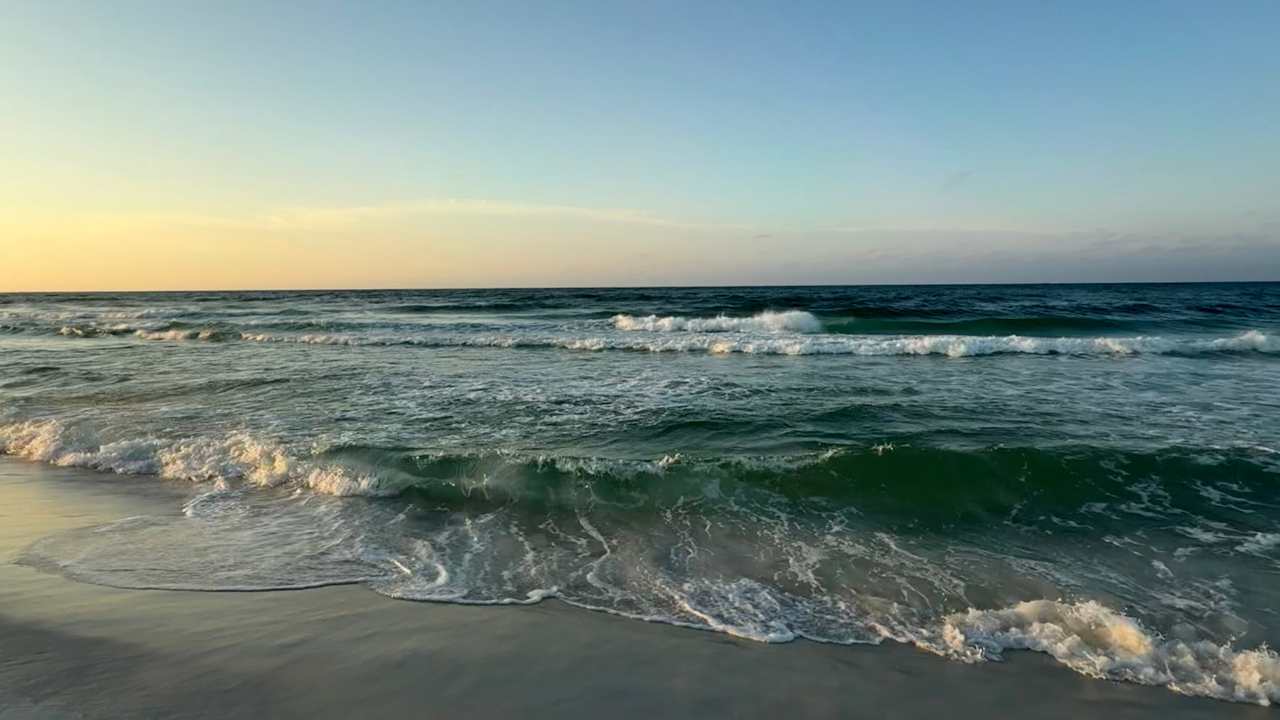
Enlightenment is when a wave realizes it's the ocean. -- Thich Nhat Hanh
CONNECT WITH GURYAN: https://fourage.io/unmasking-fear
BUY THE BOOK: https://fourage.io/unmasking-fear
In this episode
In this episode, I dive deep into the transformative power of fear with Guryan Tighe, self-proclaimed "fear technician" and author of Unmasking Fear: How Fears Are Our Gateways to Freedom .
Transcript
Hello, friends and fellow lovers of all things beachy. Welcome to The Beach Speaks, the podcast that shares stories about the beach and our connection to it. I'm your host and beach lover, Paige Friend, helping you reconnect with the beach, return
to your soul, and reimagine your life. So grab a cool drink, relax in your beach chair, stick your toes in the sand, and enjoy this episode of The Beach Speaks. Hey, beach lover.
Well, this is the first episode of 2026, and wow, I wasn't quite expecting the beach to speak to me about fear. But right now, I can't think of a more relevant topic to start the year with. My guest today is fear technician Gurian Tai, author of Unmasking Fear, How Fears Are
Our Gateways to Freedom. I was recently introduced to Gurian through Amanda Soler, creator and host of Soulful Connections. And the timing couldn't have been more perfect, because I don't know about you, but right
now, it feels like we, not just as individuals trying to live day to day, but as a nation, as humanity, we are all in the grip of fear. Gurian says, When we are in the grip of fear, our world can get very small, and for many of us, the
number of choices shrink to just four basic reactions—fight, flight, freeze, or fawn. That's not a lot of options. On a collective level, elements of our society, like governments, religions, and businesses, sometimes instill fear to divide and control.
To keep the fear in, we need to keep the fear in. To keep the fear in, we need to keep the fear in. To keep the fear in, we need to keep the fear in. To keep the fear in, we need to keep the fear in.
To keep the fear in, we need to keep the fear in. To keep the fear in, we need to keep the fear in. Fear is what keeps us feeling stuck and holds us back. What most of us don't realize is that fear has much to teach us.
What has the power to separate us from ourselves and each other, fear, also has the power to unite us. She says, Fear is not something that we need to run away from.
It's something that we need to run toward. So, let's head out to the beach. Ground our feet in the warm, soft sand. Take a deep breath of that beautiful ocean air.
And let's face our fears, shall we? Hey, Gurian, welcome to the podcast. I'm super excited to be here, Paige. Thanks for having me.
Oh, I am too. I really am. I am super excited that this is one of the first conversations I'm having for 2026 because I think what you have to share, Gurian, is super important right now.
Very apropos for the moment. And what I think a lot of us are feeling. But we will be talking about fear. And before we get into that conversation, I want to ask you the question that I ask
all of my guests, and that is, how is the beach speaking to you today? Well, I am fortunate enough to live on water. I live on the bay, in the bay area. And so, depending on whether it's high tide or low tide, I see water or mud.
And one of my favorite things is to remember that everything is going to be okay. Everything is changing all the time. And the ocean shows me that every day, every hour.
And so, it allows me to hold on to things a little more loosely and be open to the change that's coming. Oh, I love that. To be open to the change that's coming.
I was going to post on the socials a video I took. Well, I take lots of videos at the beach. And of the water at Fort Malton Beach. And I'm going to post a video at Fort Malton Beach, which is just amazing.
It's on the panhandle of Florida. I don't know if you've been there or not, but it's just this emerald blue-green water. It's just so stunning. And it's the Gulf, so it's placid.
And it's just kind of lapping, you know, what you envision when you're sitting at a beach and you just see these beautiful waves, you know. And I was just listening to the sound and thinking, what did I want to say about this? Because repetition and all of that is just basically things are in continual,
like motion, ebbing and flowing and ebbing and flowing. Just be open to those ins and outs and all of that. I haven't yet posted that, but now I'm... It seems we were aligned in what we were experiencing.
So I think that's a message to post it. I think so. I think so. Well, let me ask you first, what is it about the beach and the ocean and the water that
really speaks to you? Like, what's your relationship to all of that? Yeah. So the beach plays.
It plays a big role in my life. I am a water sign. I like to be on the water, near the water, in the water. And the beach I go to as frequently as I can.
It's a little bit of a drive for me. But my favorite thing, I'm out at the Pacific Ocean, so it's quite cold. It's not exactly the stay in and swim around kind of water. But whenever I get into the ocean, which I do very intentionally, I come out to a blank
canvas. And so if I'm carrying anything, it enables me to let it go. If I'm holding on to a perspective, I can... I can access a fresher one.
And it almost just feels like a jumpstart on presence and life every time that I do, which might have to do a little bit with the cold. But there's also something about the power of the ocean that if I am having a hard time letting go of something, I will, as I'm getting in, I will ask the ocean to help me release
what that is and kind of recycle it into new energy, as we're talking about, because then it goes out and becomes waves again. And so there's this feeling that there's always something. And so there's this feeling that there's always something contributing.
It's regenerating and it contributes to what's next. Yeah, I am thinking about the times we go out early in the morning to do what we call sunrise paddleboarding. And we haven't been out recently because it is so cold.
But when it's a little warmer and we look for the water to be maybe zero to one or maybe one to two waves, because beyond that, it's a little too much to get our boards over and out into the ocean. But I do kind of love that feeling of the ebb and flow.
And you're just kind of this is being on top of the water and not in, but that you're riding the gentle waves. And it does seem to be an energy clearing of sorts. And then swimming for me, the water is still moving.
It's not like completely still. And you just kind of have to let it flow through you and let it move you and all that, especially when you're swimming in the ocean. And you can't do that.
You can't do that. You can't do that. You can't do that. You can't do that.
You can't do that. You can't do that. You can resist it. But it's difficult.
It's easier to swim, I think, in the ocean if you just kind of go with it. Absolutely. Which I think is a good analogy for life. There we go.
That's a good segue into our main topic of the day, fear. Thank you so much for sending me your book, Unmasking Fear. I have read through the third chapter and started going through the third chapter. I have read through the third chapter and started going through the others.
But then I had all these questions. So let's start with what is your relationship to fear? What is it that you do that you wrote this book about fear? Sure.
Well, I refer to myself as a fear technician. I've actually been coaching people for just under a decade. And my focus is on fear. When I first set out to do my work, it was empathy that I wanted to focus on.
And so while it's innate for some people, I think it can be taught. And when I sat down to build that model, I was able to do that. And when I set that model and framework out, it was actually empathy that led me to fear. And so I started with a hypothesis.
I think, well, first, spoiler alert, I think fear is the most beautiful thing that there is, if we understand it, if we could have a relationship with it. Nothing has more information for us. But to the point that you were making, we fear fear.
And that's been used by governments and businesses and religions and all sorts of things to control us. So it doesn't really behoove the powers that be that people understand their relationship with fear. So it is a relationship. It's a really important time to do so.
So I started coaching about 10 years ago and really understanding individuals' relationships with fear. And the fear that I'm speaking about with you today is irrational fear. Rational fear is why we have a fear center in our brains. It's to protect our survival.
Irrational fear is the what-if scenarios that we run. It's the future tense. It's the limited beliefs that we have about ourselves. And that's really where I work with people.
And then, you know, I kind of... When I started... When I started this work, I didn't know I was going to write a book. But fast forward nine years and having thousands of conversations in the process of developing this hypothesis,
I learned so much about fear. And I think when people really understand it, it's one of the most empowering situations to be in. Because then fear is not making decisions in your life. You are.
And it's a big difference. Absolutely. Because it's part of who we are. And, like, it is a process in our brain that, at one point, keeps us going.
It keeps us alive. And then, like you said, there's a different kind of fear. The irrational one. So, fear technician.
How did you come up with that? Where did that concept come from? Yeah. So, that one, I was...
I actually remember I was sitting with a friend and we were kind of talking about websites and how to build out my website. And there's a lot of coaches out there. And so, I was really trying to find a way to stand out and be different. And so, we said, you know, fear needs to be in the name.
And, you know, I was like, I don't know. I don't know. I don't know. For me, maybe it's because I'm in the Bay Area.
Because there's some engineering. There's so many pieces. But to me, it was just like, I want to go to the messiest, air quotes, scariest places with people. And detect what's going on and why and understand it.
Because with that knowledge really gives us a way of creating new systems that support us. And so, I couldn't think of anything more than, like, a technician that really gets in and looks at something and pieces it apart. And then, make sure it's really together in a way that is supportive and beneficial. I'm thinking of, like, when you call your internet technician and you're saying, okay, you know, this is stopped.
I'm not getting a good signal. I'm stuck. Or, you know, something needs, something's wrong. I can't figure it out.
And then, they come out and they say, well, you know, this wire needs to be reconnected to that wire. And then, you know, boop, boop, boop. And some code gets put in. And, well, you got the wrong signal going here and that sort of thing.
Well, and I'm actually, I'm going to give you a real example of that. So, what happens is, if we take the neuroscience into this, every time we make a decision, we fire a neuron down a pathway. And when we react the same way in similar circumstances again and again, our brain loses the ability to realize that that's a decision point. It becomes what's called a superhighway.
And it's just an automatic reaction. So, oftentimes, because of self-critical thinking, because people are hard on themselves, we make decisions based on fear again and again and again. And then, that just becomes the automatic reaction. So, some of the work that I do, speaking of wiring, is actually unwiring these old patterns that aren't serving people.
And that's pretty incredible that we have the ability to unwire patterns from our subconscious, from our brains, to make sure that we're actually living our lives intentionally. Yeah. And that, I think, is where you come in in a special way because our wiring, our superhighway may be operating this way. And we're just thinking, well, that's the way it is.
And there was something I underlined in your introduction is that all research is me-search. I love that. I underlined and highlighted. I thought, tell me about that.
Yeah, it's funny because I think there's maybe an expectation or a thought that I don't have fear because I've worked on it. But I would actually counter that, that through my life, I had so much that I had to figure out a way to be with it so that it wasn't making my decisions. Or making decisions that I didn't even want to be making for myself. And so to an extent, I would say there was maybe a selfish element when I started this work because I was really interested in it for me.
And then I found how many people also, I mean, I think it's one of the primal emotions, how many people don't understand it because we're not taught to be with it. But it was definitely, I benefited from it. And so even like in the book, there's a lot of my client stories. There's a lot of personal stories as well.
Because I was developing a body of work through my coaching and then through living my life in a way that I really wanted to be proud of. That was one of the things I wanted to bring up is when you were talking about the eight basal fears. And then you had talked about your father and what had happened in your relationship. And let me tell you that the letter that you had shared.
Wow. I mean, you could have talked about and you did in general what happened. But then when you wrote that letter as an example of what we could do, I was just, I was thinking, oh my gosh. Tell me about that.
I'm wondering if that was your defining moment. Yeah, you know, it was hard. In this book comes a lot of exposure, which I had a lot of fear around. When I wrote the first version of the book, there wasn't really many, if any, personal stories.
It was a lot of how-tos. It was a lot of toolboxes. It was maybe some clients. I had to find examples.
And I realized a couple of things. One, I didn't want to put anybody, even though it would be confidential, I didn't want to put anybody's personal story that they may have shared out there with me. And two, I really believe that modeling is the greatest form of leadership. And there isn't shame in acknowledging that you have fear or that it takes work to practice having a healthy relationship with your fear or that you have pain.
It's pretty interesting, but we're kind of taught to fear fear and we're taught to fear pain. And so there aren't that many models that give us the pathway of actually being with that, learning from it, and seeing what's there to move from, heal. And I actually remember the day that I was sitting at this very desk and decided to include that personal letter in the book. It was a hard decision, and I'm glad that I did, because I will say when I have done that, it was so pivotal in my own journey.
And when I have done that exercise with countless people, it really makes a significant difference. It makes a significant difference in people's lives. So it's really powerful. Yeah.
I mean, because you spoke from your heart and that was you and you could feel the pain. And I think everyone can relate to that. And I'm so glad that you did include that, because there are a lot of books where people give prescriptive answers to all of these things. And I think we learn from people's stories.
And then there's that trust that you build with the person, right? Absolutely. Absolutely. Absolutely.
Absolutely. Absolutely. One of the fears is telling somebody else. And how we're going to be perceived or judged.
There's three other things I wanted to talk about. If we get back to them, I hope we can. What stood out to me, one was the basal fears. I never really thought of them in those different categories.
And let me just give a line on that so people know what you mean by that. So basically what I found in all these conversations is that I refer to them as the eight basal fears. These were fears that kept coming up, almost like the more you talk to somebody, you get down to these core fears. So we're talking in my example about the fear of abandonment and self-worth.
And so that was kind of my core one. But it could be the fear of rejection. It could be the fear of being directionless, not knowing who you are, what your purpose is. And so these eight themes started appearing again and again and again.
And it's not to say that everybody has all eight. You might have one or a few. But in the book, I kind of outline what they are and then what typical reactions associated with them are. So you can identify these in yourself because part of the unwiring really comes from our self-awareness.
And when we can start to identify those patterns and themes in our lives, those become the doorways in so we can start to make different choices. When we're in fear, we're reacting automatically. When we're in choice, we're choosing the life that we want. And that's why it's so helpful to see these patterns and then unwire those that aren't serving us.
And that's the eight basal fears are to help you as kind of a tool. For self-awareness and navigation. In basal, you mean like of the body? Yeah, like the base, the base fears.
So there might be something on top of like, you know, so if I'm like the fear of abandonment for me, like what might be more quiet is, well, I'm not going to communicate my needs in this situation because that person might leave. So I'll just I'll let that go. I'll let that go. I'll let that go.
So I might think that it's up there. Really, there's a core fear underneath that that's driving that behavior. And it takes some time to get there. You might not know reading them the first time what it is, but the more time you start to spend with it.
And again, I do go into detail. So people, you know, we're pretty even if we're not connected to it. When we read something that explains maybe a way of being, we can typically see if ourselves are in there. And so it's almost like a typing system, if you will, for people to kind of understand what what fears might be driving them.
Yeah, yeah. And gratitude. That was another thing I wanted to talk to you about. Purpose.
Because everyone's talking about purpose. What's my purpose? I know that younger people, especially in my life, are like, I don't know what my purpose is. I don't know what I'm supposed to be doing.
And then the influence of storytelling. I was really interested in talking about that because this podcast is in a sense telling stories about the beach and our connection to it. And as we talk about the beach, there are larger connections that we can make to our relationship with others. So those are a couple of things.
That stood out to me that I wanted to talk about a little more. However, let's go into what you wanted to talk about. Irrational fears. Tell me about that.
Sure. And these are actually really linked. So I will start by saying I don't believe in overcoming or conquering fear. We have a fear center in our brain.
We're not meant to. It's a really beautiful, valuable asset if we understand it. So rational fear, again, is that fear when your survival is threatened in the in the present moment. Irrational fear is.
Anything in the future tense. What if I don't come to this podcast? What if nobody listens to this podcast? What if I forget what I meant to say?
What if there's challenges with tech and it doesn't end up working? It's kind of those scenarios that we're running about the future. So it's really good to distinguish between the two. And again, we're typically aware of when we are in danger.
If you're not actually in danger, it's irrational. And what we really want to do, that's the relationship we want to start to improve. So that it's not fear that's making your decisions. It's interesting that you bring up the gratitude and purpose.
And I'm going to throw one more in there, which is curiosity. But yes, there was another. Yes. When we're in fear, we're in our amygdala.
And that is the home of fight, flight, freeze. And a slightly lesser well-known one, but it's really growing in popularity in the last 10 years or so, is called fawning. Fawning is when you appease the threat. It's the home of people pleasing, which I actually see very common.
Maybe even more. Common to fight, flight, and freeze. Yes. Yeah.
When I read that, I was like, that's a story of my life. Yes. Yes. It's a very, very common one.
And so those are happening because we never taught our brains the difference between rational and irrational fear. So we're going to react. Again, I'm very specific about words I use. We're going to react the same way until we teach ourselves how to respond to those moments differently.
Curiosity, purpose, and gratitude. Are all activities that, when studied, show that your brain activity is in your prefrontal cortex, which is the home of creativity, connection, empathy, decision-making. And so we can actually move from our amygdala to our prefrontal cortex by practicing these.
And I want to make it more specific. So I'm going to give an example for each one of them. But let's start with purpose. So I can relate to the young people that you're saying.
There was a time in my life that I felt plagued. I plagued with purpose, only I didn't know what my purpose was. And I continued to be in inquiry. And I continued to stay with that.
And I encourage people to do that. Fear can also limit our purpose. So as I started this work, in the beginning, I would often say, you know, it's just important that the work is out there. But I don't need to be on a stage.
I don't need to be doing anything. It's not about me. It's just about the message. And then over time, I started to realize, well, I was the one that was doing this work.
And purpose, for me, helped to be a driving force. So I have this line, my why is bigger than I. Which means what I'm doing for matters a little bit more than if I'm uncomfortable doing it. So if I write that book, of course the thoughts, why me?
Who am I? What do I have to say? But if I could help one person, then it was worth it. One person.
So purpose really helps me orient from the why me, from the lacking thoughts, to what I'm doing it for matters so much. More. Gratitude gets thrown around a little bit. Like it might be woo or not a big deal.
But again, brain activity is in the prefrontal cortex when we're practicing gratitude. And our brain doesn't know what we're grateful for. It just knows that you're grateful for something. And so taking stock of your assets, of what's working.
I also really find a beauty in being grateful for things that maybe don't seem easy. It's not just good or easy things. It's things that support your growth. That support your change.
And when we practice gratitude, it's almost like we're lining up to what we want more of. And so it's a very, very powerful practice for our brain. And then the third one, because a lot of people, and this links to stories too. What are irrational fears?
They're stories. You're telling yourself a story about the future. And so I have two questions that I use under the curiosity umbrella. One is, what is true?
And two is, what am I telling myself is true? So I'll give an example from the book here. I could say, I am a terrible granddaughter. I'm the worst granddaughter.
Okay. Now, if I turn towards that, what is true? What is true is that I want to make an hour of uninterrupted time this weekend to call my grandmother. What am I telling myself is true?
I'm a terrible granddaughter. Very different. Very different. One has a valuable nugget of information in there for me.
So when we can start to turn... Turn towards the irrational fear, we can actually understand, I believe, if you have aligned to your intuition, you might be getting messages on where you want to grow. I actually believe our fear is telling us exactly where we want to grow by making us scared to go to that place. And that kind of gets back to the me search thing that when you're looking at that fear, yeah, there's something driving you.
I think you had said in the book how it kind of gives you the direction in which you're supposed to go and where you want to grow. It tells you, oh. Oh, that is what I need to work on. Well, I mean, think of any courageous decision you made in your life.
I can pretty much go out on a limb here and guarantee you that right before you made that decision, you were in fear. Because fear is the inhale. It's when we're standing still and courage is when we actually exhale and move into that exact place. So our fear is literally showing us where to apply our courage.
Yeah, that's how I did with this podcast. I knew my intuition was telling me, use your voice. You have a voice. And then I think, well, I'll have this podcast.
And then I'm recording and it has to sound perfect and all of this stuff. And I was just so afraid to press that publish button. I don't know, edit it ad nauseum. And I'm thinking, OK, I'm going to press this button.
And then all of a sudden, my voice is going to go out into the world. And is anybody going to be there to listen to it? And if they listen to it, are they going to like it? And all of those things.
And all I just needed to do is press publish and then send it out and let the rest happen. But I do remember that fear of, oh, my gosh, once it goes out, what's going to happen? Are they going to like me? And all of those fears.
Absolutely. Yeah. Yeah. And in the beginning, it's not that it's not hard work.
But if we don't practice this way, it's hard for hard sake. If we start to practice a new way with fear, I'm hard for rewarding sake. So over this course of decade, I actually I named my critic one of my faces of fear
because it helps me create space so I could see when she was coming. But now I can turn towards her and say, oh, what are you doing here? Why are you showing up? I can meet her with levity and interest instead of kind of victimization and then being taken over
and feel like I'm making choices, but actually just automatically reacting because of that presence. That reminds me. I like to think of Liz Gilbert's book, Big Magic, where I think she talks about fear. Like, we're going to go on a road trip and you can come along.
I know you want to, but you don't have a say in anything. You might say a few things or want to direct a certain ways. But, you know, I'm sorry, you're not allowed to. Yeah.
And so if you look at like the stages of evolution of how to look at fear, I definitely think that was a great step that people even allowed the presence of it. I like to go. Even a step further and actually befriend fear, because when when you do have that relationship,
nothing has more information for you. Oh, tell me more about that. How do you if I take this, let's go back to purpose, for example, that plagued with purpose. OK, I didn't know what I wanted to do, but I knew that I wanted to be in service.
I knew that I wanted to contribute in some way. OK. And so first I thought it was empathy. And that led me to fear.
And when I started with fear, I mean, the comments that I got in the beginning was, it wasn't exactly the most supportive. There was a lot of, you know, concern if this was a business idea. But I stayed committed because I knew the essence mattered to me.
So because it where we feel most alive, I think, is also an indicator of where we're meant to be. And I knew that I was doing whenever I did this work, I perk up. I mean, when I talk about it, I get so excited.
And that was, to me, indication that, you know, keep following that path. So when I actually. Credit you a lot. My first attempt was a podcast and it didn't end up coming to be.
Podcasts are a ton of work. Everybody out there. You should always be thankful to your hosts for putting them together. There's so much that goes into a podcast.
So thank you for that page. And then actually after George Floyd, I partnered with a policeman to build a training program for police officers. And for a number of reasons that didn't come to fruition.
But what mattered to me was that, and again, it was by fear that actually showed me this still matters. Maybe you don't have the form, right? But this still matters.
And that's what led me to writing a book. I'm not a writer. I didn't set out to publish a book. So then I did all this research to substantiate it.
That was the form. And my fear kept showing me, nope, don't walk away. This still matters. This has to get out there.
That might not be the right form. Stay with it. Stay with it. Because I was scared to do it.
And so it was really asking me to, to continue to look at it and to try new forms. And like the. The notion where we started to let go. I could have, after the podcast, I could have said, well, I failed.
That didn't work. And instead I held on loosely to how to get it out there, the form of it. And I did hold on to the essence of what I believed to be true, which was the work that fear was really teaching me.
Well, it is very well written. So I would say you are a writer. I have to admit. I don't really feel like I have a book in me, maybe an audio book.
I majored in English literature in college. So I did a lot of reading and I appreciate writing. And when I read a book, I have to read every word because I know that there is a lot of intention and all right, well, that doesn't really belong here.
That sentence doesn't say what I want it to say. Oh, that word is perfect for that. So I feel like I owe the writer. And the words to read them.
And I, which is why I think when I was reading in these, there were certain ways that you had in your giving the example of the letter that you wrote to your 12 year old self. I wanted to honor that part of your writing because that is so important. And, you know, just getting it on paper is one thing, but then being able to organize
it in a structure where we can follow along and do the things. I appreciate the way you put it together. So let's talk about gratitude. And I think he used the word awe.
Tell me more about that. Yeah. So awe is one of my favorite things to experience as a human being and gratitude. It becomes my way of making sure that I'm always open to that.
We're such creatures of habit, right? We can take things for granted so, so quickly. And so I think it started actually, I was in at a time, and this is where, again, all research is research.
So when I started this work, I had just left a 10 year marriage and I had left a job. And I thought if I just created space, new would come in. And in actuality, space was just space. And I went down a little, you know, Alice's rabbit hole and learned all about the shadows
inside of myself that I wasn't really connected to or willing to connect to before that. And it was at that time that the self-critic was really loud. I hadn't developed this body of work. So gratitude, actually, speaking of intuition,
it kind of came out of the box. It kind of came out of the box. It kind of came out of the box. It kind of came out of the box.
It kind of came out of the box. It kind of came out of the box. It kind of came out of the box. It came to me one morning that I had to start living my life differently.
And so I put a mason jar and a stack of post-it notes next to my bed. And every morning, in order to like the gateway to be able to go to the bathroom, I had to write something down that I was grateful for. And it could be, some days it could be something very big.
Some days it could be, I have my breath. I mean, talk about something we take advantage of. It's pretty amazing life force. And over time, I would see the colored post-it notes build in the mason jar.
And I would realize how much there is to be grateful for. And I do believe X begets X. So the more that you start to appreciate, the more that there is to appreciate. It's this beautiful cascading event.
I also believe, I'm going to loop this back to something that we were talking about before. I think there's, if we take it down again, Basil, if we take it down to core mindsets, I think there's two mindsets to live in this world with. One is, why is this happening to me?
Which is a very victimized, disempowering mindset. And one is, why is this happening? Why is this happening for me? Why is this happening for me does not mean that it's always easy.
It might ask of you. There might be growth. There might be development. There might mean change.
But that mindset then sets you up for growth, sets you up for learning, sets you up for making choices that are intentional, that you get to build the life that you want with. And so in a weird way, gratitude starts to become this kind of addictive element in your life
that just starts kind of flowing into other elements of your life. And then again, you've got the, the brain function,
which has you in the prefrontal cortex. And I think it helps me actually access presence because it's so easy with the amount of distractions that we all have coming at us, information, technology,
you name it. It's very easy to miss where we are and what's happening in that moment. And because I instituted that practice, I think it just kind of became woven in and it's such a powerful player in my life.
And so because of that, I get to experience a lot of awe. Sometimes it's in nature. Sometimes it's with people.
Sometimes it's, it can be a number of experiences, but it definitely connects me to my life in a, in a much more present way.
Yeah. I was thinking about the word awesome. And I want to say, I don't know,
10, 15 years ago, when I heard a TED talk, a woman was saying,
stop saying awesome so much. And I went, why? And she described it.
We're taking the, we're taking the, we're taking the, we're taking the,
we're taking the, we're taking the, we're taking the, we're taking the,
we're taking the, we're taking the, we're taking the, out of that word.
Awesome. And I thought, you know, yeah,
maybe she's right. Maybe I really should reserve that word for when something is evoking that sense of awe. It can be something very simple. I think that's what came to my mind when I read it in the book.
And one more thing I'll add there, going back to the wiring, our brains aren't invested in what's best for us. They're invested in what data we give it.
That's what it's looking to validate. So if we're going to do something, if we are looking for things to be appreciative for, if we have that mindset,
our brain is going to find that. If our brain is looking for, why is this happening to me? Your brain is going to find that pathway.
And so the practice of gratitude really, it's more, to me, it's much more than in that moment.
It's a very generative practice that enables you not only to access presence, but I think to see the world through a different lens that supports growth and connectedness. And I like the idea, I like the idea of practicing gratitude for what we might deem as the not so good things,
right? Why do I want to be grateful for a cloudy, rainy, blustery,
cold day at the beach? I was thinking about that earlier and I said to my husband, you know, I'm kind of grateful for these days when it is cloudy and cold and blustery,
although it's not the typical beach day I would prefer, but it does give me an appreciation for those days that are super nice. And then I can go out and lie in the sun and it gives me a sense of, you know,
sometimes we'd like to be a little chilly and get to snuggle up and all of that. So, you know, I brought out this colorful sweater and yeah.
So you just kind of turn it around in some situation. What do you think about story? I think story is incredibly powerful. When I was going through the process of writing,
that was really when I went back again and again, the layers was always, okay, how could I make this personal?
How can I make this a story? And again, it's a perfect segue from what I just was sharing. Our brains are not invested in what's best for us.
They are invested in validating the story that we are telling it. So be so careful. And that includes your spoken words. It includes your thinking words.
And so we are active participants in creating our life. Our life isn't just happening to us. And again, that's not to say you're not going to come through moments that are
challenging or hard. There certainly will be, but even how you navigate those will be differently based on the stories that you're telling yourself.
So, you know, if I have, if I have a client that's in a really hard time,
that's using very definitive language about not being able to do something, can't figure something out, you know,
even if I just have them add for now at the end of that sentence, just add for now, or instead of people will claim to be a certain, this is who I am.
I'm not organized. I'm X, Y, or Z.
Well, then you're definitely, not going to be, you know?
So even that up until now, I was X going forward. I'm working on, I'm practicing.
You hear me use the word practicing a lot. And that's because I believe we practicing something all the time. I think that people can over identify with something that they are. We are what we practice.
We're practicing something all the time. So what stories are you practicing? What is the role of your character? Are you the villain?
Are you the hero? Are you the detective? Are you the educator? Are you the observer?
We get to choose what characters and roles we want to play in the movie of our lives. And this is why, I mean, this is why,
again, story is used in religion. It's used in business. I mean,
now storytelling is one of the most massive industries that there is. And it really, it's because our brains are wired to actually be impacted by storytelling. Our brains are wired to belong,
which is why the fear of rejection is so, so powerful. And so the first place I would say is understanding what stories are you telling yourself? What roles are you playing?
And if you're always playing one, try on another one. Because the crazy thing is we are so adaptable. I mean,
one of my favorite things about this work is I get to see people become the truest version of themselves. And we're not talking years. We can bring our awareness to how we think about things, to the relationship that we have with fear,
and then literally, literally become more authentic versions of ourselves when we understand that. And story and identity, because identity is so powerful.
If we are not actively choosing the identity that we are wanting to show up with, then there's patterns of identities that we've put in place that will happily take the lead there. And one way to do that is actually narrate your day to when, when I started this work,
I would often think out loud to myself. And that's also what connected me. My critic, one day I was walking and I stopped in my tracks and I said,
if any of my friends talk to me the way that I talk to me, I'd punch them in the face. There is no way. But those were the stories I was telling myself.
And that's why I had to name her. That's why I had to create space. Now, again,
going back to that grandmother example, it's not that there's not a nugget of value, but is it just ad nauseum on loop, cruel language?
Or am I turning towards that to understand what valuable piece of information is there? Beneath that maybe not so nice story. And so talking out loud just in the beginning to hear yourself, you don't have to go out and do it in public,
do it at home, but just to be aware of how do you talk? How are you narrating your days in your life? It's,
it's an interesting starting point. Oh gosh, that negative self-talk spot on. It's pretty powerful.
It is. It is. I was talking to some friends. We were just sitting around the fire pit.
Talking about our new year's intentions, as I like to say, but a friend had said, well,
I procrastinate. I'm a procrastinator. I really want to stop being that. And I said,
well, for one thing, I think a lot of people say that and that we're procrastinating because we're, I don't know.
Do you, do you find fear in that word in that behavior? Yeah. So,
I mean, I think procrastination can be a flight reaction. So you are moving away from it. I mean,
to me, it's, I never think that it's all or nothing. I try to move away from binary and try to kind of explore the space in between.
So for me, procrastination might be one of two things. One, it's a form of avoidance.
The other might be your body actually asking for rest. And so attuning to, is this my needing to fill myself up now, or is this me avoiding something?
And if it is me avoiding something, that's a great time to use those two questions to leverage. Curiosity and ask yourself, what is true?
And what am I telling myself is true? Cause that's a very easy place for the story to take over and then to prevent you from actually putting your energies where you would want them to be going. And it's like labeling yourself. I am a procrastinator.
And so then it immediately goes to all the ways that I am a procrastinator. And then all of a sudden, see, there's that confirmation bias.
See, I am one, whether if you could, once again,
flip it around and, and so page, you're getting to a great segue, which I actually,
it's the most important word I believe is in the English language. All right. Tell me the only word I have on my desk, which is pause.
So we fall into those loops. I'm not, I'm this. So this is what,
okay, well, and then we just, and then it's done.
If we pause, which can be a breath, it doesn't need to be 45 minutes. It doesn't even need to be 10.
All we're doing is stopping that automatic reaction by pausing. And I will say pause out loud. Sometimes just pause. Okay.
Now, can I move into gratitude? Can I move into curiosity? Can I move into purpose?
What are one of the gateways that I can go start to explore the fear with? And that's where I can actually access the information that matters most to me. That's most important. That's actually trying to get me to move through with choice and intention versus reaction.
It's really kind of a mindfulness process. And I've learned the reaction versus respond sort of concept, but by taking that pause and where, you know,
where did that thought come from? Why am I feeling that way? And looking at it as an observer and thinking, okay,
that's interesting. Why is that? And then you conform your response rather than letting you have that. Basil.
Exactly. Fear kick in. Yeah. A friend of mine calls it the sacred pause.
Yes, I completely agree. In fact, it's an entire chapter in my book is just on the word pause.
That's how powerful I think that it is. Listener, friend, beach lover out there.
You need to get this book. I'm telling you, it's got it. Are you familiar with A Course in Miracles?
I was thinking about was that the thought, those of you who haven't read A Course in Miracles, it's about fear and love and how fear and love cannot coexist. And that was kind of a hard concept for me to figure out.
What are your thoughts about fear? And love coexisting? And does one inform the other? And how?
Yeah, I mean, I actually do. I think,
I think fear is leading us to love oftentimes in ourselves. What we fear, I think is what might need to be healed in ourselves. That's what's important to us.
It's what, it's what matters most to us really. And so, I mean,
even if you take that letter example. So I had a lot of fear as a result of my experience with my father at a young age around abandonment. But that fear was actually showing me what in me wanted to be healed, what in me wanted to be loved,
where I needed to practice self-love, where I needed to learn about myself, where I needed to learn what was important to me, what were my needs that I was too scared to vocalize about after the time.
All of those really began to lead me to who I was. Most people that just avoid fear can kind of bypass that. And maybe that'll work for a certain amount of time. But I often find that those deeper things get triggered
when the bigger things in life happen. If we don't go and learn from them and look at them. And so while maybe they can't coexist, I actually think fear is an incredible doorway to love.
If you can have a healthy relationship and understand what it's trying to show you. Because to me, almost fear is the fear is lack. Fear is scarcity,
right? And love is abundance. And so if fear is kind of showing you what is lacking, then that's a pathway to abundance.
Whether that's something that you're wanting to, again, heal within yourself or invite, in more of externally.
So I see a very close link between them. Yeah, I do too. So what type of person, what are the scenarios of people coming to you?
What is it that they're coming to you for? Yeah, oftentimes people will feel stuck. They feel stuck somewhere in their life and they're not sure what to do about it. And so the stuckness is a great entry point.
Or people are going through a big transition. And fears tend to come up when there's any new or unexpected, uncertainties. So people will come that way as well.
It's, you know, I think a lot of people like they they're drawn to the notion that, I mean,
your shoulders relax when you understand that your fear doesn't have to be a terrible thing. You can be free from a negative relationship with fear. So I think it's really inviting for many people when they know that that's a
possibility. What do you think about worry and fear? I've often said worry is, is praying for what you don't want to happen.
Yeah, it kind of goes back to the, again, be careful with the words and the, you know,
the stories that you tell yourself, but I'm biased because I think everything comes down to fear, but I think that there are masks of fear. So jealousy,
envy, worry, comparison, mindset,
anger. I think all of these are masks of fear because it's easier to feel those things than to even own that you have fear around something. So I really,
I don't believe in positive or negative emotions. I believe in just information. And so to me, that is a invitation to view again,
what is true? What am I telling myself is true? What the more specific we can be. So when someone comes to me and they tell me that they have a fear,
I'll say, well, what is the story of your fear? What does that fear sound like?
What specifically is it telling you? Because we need that information to actually start to see what you might try to be protecting yourself from what actually matters to you, all of those pieces.
But yeah, I think worry is a, is a mask of fear is what I would call it. Yeah.
I know a number of people in my life who just worry. And I want to say, don't. I've learned to think about what I can control and what I can't control.
And there is so much I can't control. I can't manage expectations. No, definitely not.
And I wish that we could continue this conversation. Oh, I know you have to go. That's right.
Oh, is it four o'clock already? Oh, all right.
Well, we didn't talk too much about the beach, but I think we'll, maybe we'll do a part two.
Yeah. All right. Well, thank you so much.
It was a pleasure getting to know you and I hope we chat soon. Thank you. Me too. And thanks for putting this conversation out in the world.
I do know how hard podcasts are and it's really beautiful. Thank you so much for sharing. Oh, you're so welcome.
Okay. Thanks. The beach is speaking. Are you listening?
So do you feel like you can face your fear a little better now? I'm curious. What's your typical reaction to fear? Flight,
fight, freeze, or fawn? Well,
if you said fawn, I'm happy to tell you that as a recovering people, pleasing fawner, there is hope.
Seriously, though, the beach. And I hope that whatever fear is driving,
you that you find the courage to run toward it. Dive into the ocean. Let the waves move under you, above you and through you until you no longer feel stuck.
And to help you ride those waves, I highly recommend that you check out Gurian's book, Unmasking Fear. You'll find the links to that and more of her work in the show notes.
And stay tuned. I have more beach sleep stories coming soon. It's a little beachy ASMR to help relax, de-stress,
and calm your mind. The beach is speaking. Thank you for listening. Thank you.
Thank you. Thank you. Thank you. Thank you.
Thank you. Thank you. Thank you. Thank you.
Thank you. Thank you. Thank you. Thank you.
Thank you. Thank you. Thank you. speaking. Are you listening?
Have a sea turtle day!