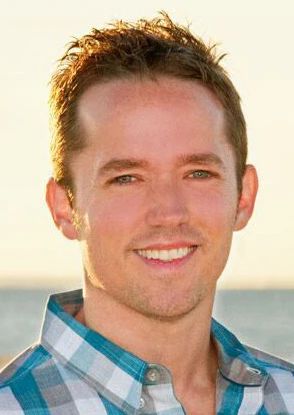
What if the ocean isn't just a place to escape, but a place that can actually help heal anxiety, inspire purpose, and change the course of your life?
For Mike Coughlin, founder of Blue Ocean Life, that's exactly what happened.
In this inspiring episode of The Beach Speaks, Mike shares how childhood memories of Cape Cod, a failed business partnership, anxiety, personal loss, and the healing power of the ocean led him to create a mission-driven brand built around wellbeing, community, and living with intention.
Together, we explore the life-changing science of Blue Mind, the difference between living in "Red Mind" and finding your own "Blue Ocean," and why success isn't measured by working harder—it's measured by creating a life that allows you to thrive.
Whether you're feeling burned out, dreaming of a different way to live, building a purpose-driven business, or simply searching for a little more peace, this conversation offers hope, inspiration, and practical wisdom for navigating life's inevitable waves.
In this episode, you'll discover:
🌊 How spending time near the ocean helped Mike overcome anxiety and chronic stress
🌊 Building a business rooted in community instead of competition
🌊 Conscious entrepreneurship, slow fashion, and Blue Mind Strategy
🌊 The importance of creativity, rest, and finding your own version of success
If you've ever felt calmer by the water, wondered why the beach feels like home, or believed there's a better way to live than constant hustle, this episode is for you.
More about:
Mike Coughlin, the visionary founder of Blue Ocean Life, a wellness lifestyle brand inspired by the coastal way of life found on Cape Cod and along the coast of Florida. After spending many years in the fast-paced world of marketing, Michael came to appreciate the importance of slowing down, reconnecting with nature, and creating a healthier relationship with work and life. The beaches, waterways, and coastal communities that shaped his experiences became the inspiration behind Blue Ocean Life and its mission to promote mental wellness, balance, and intentional living.
Today, through meaningful apparel, storytelling, and community initiatives, Michael uses Blue Ocean Life to encourage others to embrace the restorative power of the ocean, spend more time doing what matters most, and create a life that feels more purposeful, fulfilling, and connected.
Connect with Blue Ocean Life:
https://theblueoceanlife.com/pages/join-the-movement-collaborative-opportunities
Follow @blueoceanlifeco on Instagram, Facebook, and TikTok
In this episode
What if the ocean isn't just a place to escape, but a place that can actually help heal anxiety, inspire purpose, and change the course of your life? For Mike Coughlin, founder of Blue Ocean Life, that's exactly what happened.
Transcript
Hello, friends and fellow lovers of all things beachy. Welcome to The Beach Speaks, the podcast that shares stories about the beach and our connection to it. I'm your host and beach lover, Paige Friend, helping you reconnect with the beach, return
to your soul, and reimagine your life. So grab a cool drink, relax in your beach chair, stick your toes in the sand, and enjoy this episode of The Beach Speaks. I was dealing with a lot of anxiety, and one day I was Googling and I searched for anxiety
and ocean, and boom, Blue Mind came up, the book. I said, wait, does the ocean actually reduce anxiety? And the answer is yes. The thing is, blue ocean life is not really life is good.
Life can be really bad, and you can work really hard to get to a better place, to that blue ocean. So really, our company is about a social mission. But also, in my opinion, what I've done with my life, I think, could inspire people to
achieve greater and not be limited by what happened to them or victimized. But that was just the beginning of the journey. To grow a business is really hard. So you need a lot of saltwater in your life to do it.
Because without saltwater, I would have checked out years ago and said, this is way too much stress for me. Saltwater heals everything. So I think that's a really good way to start.
So I think it's a really good way to start. And I think that's a good way to start. So I think it's a really good way to start. Hey, beach lover.
My guest today is Mike Coughlin, the visionary founder of Blue Ocean Life, a wellness lifestyle brand inspired by the coastal way of life found on Cape Cod and along the coast of Florida. Several years ago, when I first started exploring the concept of Blue Mind, a friend of the podcast, Amanda of Northern Tide Studios, told me that blue ocean life was a great way to
connect with Mike. That he had started a new business called Blue Ocean Life, selling ocean inspired apparel and that he might be interested in sharing his story. I thought, Blue Ocean Life, where had I heard that before?
It didn't take me long to put two and two together. I immediately dove into my dresser and there on the top of a stack of my favorite t-shirts was my beloved blue racerback tank with the logo Blue Ocean Life. I remember seeing it advertised online, Instagram probably, and I couldn't press the purchase
button fast enough. This was a brand I could really get behind. I couldn't wait to get Mike on the podcast, but every time I reached out, he said, life is a bit stressful right now and we're in the middle of relaunching the brand.
It took a couple of years, but we were finally able to set a time to record and it was worth the wait. Today, Mike opens up about how he turned personal tragedy, business failure, and burnout into a mission-driven brand by combining the science of Blue Mind with the business of Blue Ocean
Strategy. We talk about how the ocean was essential to his overcoming chronic anxiety, using AI as a modern co-pilot for creating a successful business. Slow fashion.
Autonomic flexibility. And why floating in saltwater might just be the ultimate reset for your mental health. Welcome to the Blue Ocean Life. Hey, Mike.
Welcome to the podcast. Thanks for having me. Oh, it's great to have you. I know we've been working on this conversation for a while and it's all good, but it's hard
to find the time. So thank you. Anyway, while we start, I want to ask you the question I always ask my guests in the beginning.
How is the beach speaking to you today? The cool part is I'm about a mile from the beach here in Cape Cod. I can walk there. I try to go.
Almost every day to take a walk. So it's always just helping me neutralize my stress levels. It's like my antidote, like vitamin C. So I'm always going there just to calm down during my busy schedule.
Judging by your accent, are you from Massachusetts? Are you did you grow up in the Cape? Tell me a little bit about your beach experience. Sure.
Yeah. So I grew up in Massachusetts. I grew up about 30 minutes south of Boston. It's funny.
I wouldn't think of me growing up in a coastal community. But everywhere in Massachusetts in the eastern part is close to the coast. Right. So I was about an hour, probably 45 minutes to Plymouth where Plymouth Rock is.
And Cape Cod was about an hour and hour and 15 minutes. So I grew up going as a child to Cape Cod and to Plymouth. And that's where I grew to love the beach. And then we would go to the Cape.
We call it the Cape in Massachusetts. We go to the Cape every summer for two weeks. And then, yeah, as I got older. I started going to Florida during the wintertime.
And there is a whole story behind that. But yeah, my beach experience dates back to my early childhood, basically. That's wonderful. Where in Massachusetts, where outside of Boston did you live?
It's called Brockton. It's like it's a city. It's a small city, about 100,000 people. It's about, I think, 23 miles to Boston.
So if you look at a map, if you were to look at a map of Boston, Cape Cod and Providence, it's right in the middle. That's a triangle, I would say. So you could get to Providence in 45 minutes.
You could get to Boston in 30 minutes. You get to Cape in about an hour-ish. All right. I've had college classmates from Worcester.
Worcester. And let's see, Stoneham. So you know the names of the towns. I know some of the names of the towns.
Pronunciation. Some of them. But yeah. I came from a mountain town in Pennsylvania.
So nowhere near the beach. However, I think I was always a beach girl because growing up, I was always begging my parents to take us to the beach for a vacation. Please go to the beach. Please go to the beach.
But we were a little bit farther away than an hour's drive. And then when I went to college in Massachusetts, I went to Mount Holyoke. And my roommate was from Cambridge. And a lot of my friends would vacation at the Cape.
I never got to go. You never have? No. I never got to go.
I was a poor college student, and I didn't have any money to take the bus ride. And then in the summers, people were getting jobs working at the Cape. But those were hard to find at that time. And I thought, eventually, I'll get to visit.
Got it. I am curious about your beach experience in Florida. You said you would come to Florida. So tell me about that.
Yeah, of course. So quite a story. I've had a lot of significant. Periods of my life.
But the beach, really, beach became part of my life again. Around the beginning of the remote work era, which was, I was living in New York City in 2005 to 2008. And then there was one guy, like, this was right around where the internet, like, Google came out. And I was doing work with Google, like, marketing work.
And basically, someone at my company came in. And he was from Southern California. And he pitched the CEO. And he was like, hey, I'm a CEO of the company.
Can I move to San Diego and work remotely for the company? So he was the first person to do that. He lived in La Jolla in Southern California. Beautiful area.
And then I said, wow, why not me? At the time, I was a little bit wary of the city. And the summers are brutally hot. So I pitched them to work remote, too.
So I ended up back in Massachusetts working remotely. And then that was always my goal. My goal was remote work. I was one of the probably first remote workers before the pandemic made remote work really grow.
But it was always my dream. I was like, I just want to go and live on the ocean when I work. And it was, like, worth more than money to me. It was just about being near the ocean.
So that's how it happened, where I started doing remote work. And it gave me the flexibility to work wherever I want. So then my parents ended up getting a condo in Hollywood Beach. It's between Miami and New York.
And then I stayed in Miami one time. And I've been going in Fort Lauderdale, I'll say, for that period of time when I was working remotely. Both for another company and for myself, I started traveling, like snowboarding. I would call myself a young snowbird.
And I started probably in like my mid-30s or early 30s. I started snowboarding maybe seven or eight years ago. So that's how I started doing it. And that's how the brand my company evolved was that lifestyle of always being near the ocean in warm weather.
Because I don't like the cold. Because the thing about Massachusetts. It's nice six months of the year. And then the rest of the year, it's not nice.
So I always dreamed of getting out of here for the warm weather. And then just returning back to when the climate was moderate. Yeah. I live at Jacksonville Beach, which is probably about a four and a half hour, maybe five hour drive down the coast of Florida.
So we don't get down to that area very often. We pretty much stay up here on the northern part of the state. However, we go in January typically down to Hutchison Island, Jensen Beach, which is outside of Jupiter, which is a little further north of, we'll say, Boca, Fort Lauderdale, that area. And it's just such a great place to go in January.
Further south. Yeah. It's beautiful that time of year. It's so nice.
January can be a little cool sometimes. But when you hit February, there's stretches when it's 80 and it's sunny every day. And then this past winter, I was over on the west coast over at Anna Maria Island near St. Petersburg. And that was beautiful in February, too.
I like the summer warmth, not like the spring. I want to be in beach weather. So that's why I like southeastern Florida, because it's really beach weather that period of time. It just takes maybe a month, like I think over because it's further north.
So I think I went to the Tampa area. I went to the Tampa area. I went to the Tampa area. I went to the Tampa area.
Maybe it was March. And then by the time March rolled around, it was just perfect. It was sunny. I was joking with my parents when they came up here.
And it's been a stretch of just lousy weather in Massachusetts. And the cloud cover is just we got more sun in one week in Florida than we do in months in Massachusetts. So it's not pleasant. The spring is sort of wet and cloudy.
It's reminding me of England almost or the UK because it's just long sleeves. And so it's not very much. But now it's really beautiful out now this time of year. Yeah, you really do appreciate that sun when you don't have it for sure.
I have a little history with that St. Pete Clearwater area. My parents in the last few years of their life had relocated to Clearwater. So I was going there every weekend. I was living in Orlando.
It was about a two. Two hour drive over there. But we got to hang out at the beach. And it was just a really wonderful time to spend with them as they were aging and their health was failing.
And we would just go to the beach. It was just so healing. And then when they both passed away, I was there as often as I could just to gain some peace of mind, some serenity and healing. And, you know, go through all the grief that one experiences.
And. I. Met my husband, Treasure Island, which is basically St. Pete Beach in that area. So we have a fond history of that as well.
And we have friends in Tampa. And Annemarie is gorgeous. I always find friends that live near the beach. Yeah, exactly.
Yeah. Tell me about Blue Ocean Life. It's quite a story. Where do I begin?
Okay. So I guess it goes back to around that time where I mentioned previously when I was living in New York City and I was working. Yeah. Yeah.
Yeah. Yeah. Yeah. Yeah.
Yeah. Yeah. Yeah. Yeah.
Yeah. And I moved, started working remotely. Right. So then I left New York City.
I still have a lot of friends there. So I still go there. I moved back up to Massachusetts. And then at that point, my parents weren't living on the Cape at that point.
I had moved back to my hometown for a little bit. Then I had moved to Boston. I lived in Boston a little bit. And then around that period of time, I had actually left my old company doing marketing.
And I had partnered with somebody that we were friends that we worked together. Right. Right. Right.
Right. Right. Right. Right.
Right. Right. Right. Right.
Right. Right. Right. Right.
Right. Right. Right. Right.
Right. Right. Right. Right.
Right. Right. Right. Right.
And I was pretty young. I was probably in my late 20s at this point. And then we basically partnered together. And I was living in the city.
And it was like a marketing agency, like Google Advertising, which was new at the time. So I had a really pretty successful career working with this growing business in New York. And then I started working remotely. And then we started to leave the company and start a business.
So like many people that start businesses, it doesn't go very well. I was living in the city. And financially, things were not doing well. And we basically had a big dispute.
about the business. I was young and naive. I didn't sign a contract that I reviewed and he was older than me and he sort of took advantage of me and basically forced me out of the business. And then I fell into some debt, some credit card debt, just trying to get out of the contract. And it was a big to do. So then at that point, my parents had moved to the Cape.
So I was in my late twenties. They bought a house on the Cape, beautiful house, probably about 2010. And then I was moving back in with them. Now it's actually common place even now with people in their twenties and thirties to live with their parents because financially it's so difficult out there. But I was one of the first people to do it. And it's
not like the thing that is really cool, except the cool thing was my parents lived in the Cape, right? That was the accidental surprise, which was like, I left Boston and then I moved in with my parents and then I split off from them. And then I was dealing with a lot of anxiety. I had a history of anxiety and stuff. And I was realizing that the more...
time that I spent at the beach, the better my anxiety became. And then I remember one day I was Googling and I searched for anxiety and ocean and boom, Blue Mind came up, the book. And it was like, I already know what was in the book before I even read it. Right? So I said, wait, does the ocean actually reduce anxiety? And the answer is yes. And at that point I was struggling financially.
I have a lot of anxiety. I had emotional issues. Stress, stress like that. And it was this cosmic event that happened one time. So the company was founded in Cape Cod, but also in Florida. But I remember I was like, I was going through a bit of an awakening, to be honest with you. I go out to this beach where you could drive, drive out and
there'd be nobody there. And you could see for miles, there's nobody there. And I started to really adapt, learn meditation and get into just feeling emotionally, like had a reawakening at the ocean. And then one time I was at the beach and when my last company broke up, we had this consultant and that
consultant came in and he handed us a book and he said, there's this book called Blue Ocean Strategy. And it's basically about how companies are sinking in a red ocean. A red ocean is bloody with competition, right? So what he taught me was that we were sinking in the red ocean and that became my Bible, that book.
So I had two Bibles. One book was Blue Mine and one Bible was the Blue Ocean Strategy. So I remember one day I'm sitting on the beach and I'm saying everything I learned about my failure in the previous business, everything I had learned about creating a unique marketplace versus competing in the competition was adaptable to your lifestyle. Meaning people are caught up in the rat race. They want to have a bigger house than their friends. They want to make more money. So it's like they're racing each other, which was a metaphor for what the book was talking about. So it's like at that moment, I'm sitting at the beach looking at a blue ocean. And I'm like, what's my next business idea? And then I said, blue ocean, the merging of blue mind, which is adapting a business model to achieve greater well-being. So a lot of blue mind is about that, like getting out of red mind. So I was like, I was reading the book Blue Mind. I was saying red mind is chronic stress. Right. And so there was a parallel. So I was wondering, I said, I wonder if the either author had read one of each of the books because there was two parallels between the books.
And then the first time, then I think I registered the Instagram handle a long time ago. It's been on and off. And the reason I say Florida was part of the story. I was sitting on the beach down there. It was the wintertime. All my friends were up in New York City or Boston freezing. And then I was on the beach and I just created the handle Blue Ocean Life Co, which is our Instagram handle. And I use the hashtag. So this is the Blue Ocean Life. You go in the warm weather. You live where you want to work. You focus on your health and well-being. You're not worried about competing with other people for wealth. You find health and happiness. And then all of a sudden it was like this epiphany of what this would ultimately be. And then it just it fed into my story about what happened in my lifetime and about finding healing near the ocean and blue mind and post-traumatic stress disorder, which I've had some of. And then all that's where the vision came from. But that was just the beginning of the journey, which is that was the origin story. And we're still moving in the direction. But this is really a turning point. So it's been sort of on and off, like stop and go for a while.
But this has seemed to be a turning point year. I think I remember that book on the cover. Did it have a bunch of red dots and then there was like a blue dot in the middle or something like that? The Blue Mind book?
The Blue Mind Strategy. Oh, Blue Ocean Strategy? Blue Ocean Strategy, yeah. Yeah, it might have.
Yeah, it's the same metaphor. It's essentially the same metaphor as Blue Mind versus Red Mind. It's Blue Ocean. Yeah, that might have been it.
It's a world-renowned business book. And they actually show that if you're going to start a business, that's the book to read. Because what it does is it trains you to think differently than everybody else. You essentially, you're creating something new rather than competing with other people.
It's the lifestyle adaptation in addition to the business strategy. I would argue that we're probably the first business to ever turn a business book using the strategy itself into a brand. Yeah, so that's our unique angle. Like the social mission and we donate to nonprofits.
And so we have a whole strategy, a Blue Ocean strategy. But it's been a very choppy ride to get where we need to be. I like to say that a business kind of has its own dharma and you help bring it into existence. But it has basically a mission to uphold.
And your job is to reverse. Reveal that and help it along. So sometimes what you think it's supposed to be ends up becoming something different. But when it comes to Blue Mind and the ocean, I don't think you could go wrong.
You just go with the flow and use the tools that you know to help along. Plus, in this day and age, branding, working for Google, you know a lot more than a lot of us on the back end. And what happens and working with algorithm and searchability, SEO, all those things that as me as a podcaster have had to deal with. And just getting people to listen to this podcast, how you get yourself out there and your mission and all that.
And I completely understand the need for our younger people to come back home. To regroup. To regroup for a little while to get resettled. I think general anxiety disorder in our millennial Gen Z is astounding.
It's beyond what I as a Gen Xer experience. Because the job market wasn't nearly as difficult as it is today. And just living, generally living, being able to afford where you are, all of those things cause a lot of anxiety. And then, of course, if you have an idea to start a company.
And that doesn't work out too well. There's a lot of investment in that. And to have that taken away. I have two adult children.
They've struggled through all of that. And we've been able to help them. However, I can understand that anxiety. And how being at the beach really does help.
Being near the ocean. Being near water. Which is what Wallace J. Nichols talked about. It didn't really have to be the ocean.
It could be a lake. It could be a river. It could be your bathtub. Just something about water.
But tell me, what was it about being at the Cape or being in South Florida by the ocean that helped you relieve your anxiety? Or did you even know? Did you just sit there and listen to the waves? Were you cognizant?
Were you cognizant of what it was helping you do? It wasn't even anything that was conscious. It was just the results were remarkable. I remember the best summer I had was I wasn't working a lot.
The business wasn't making a lot of money. But I was getting to the beach all the time. And sleeping eight hours a night. And I'm saying, wow.
It seems like, oh, it's like a wives tale. No one talks about the science of it. Everyone knows it's implicit knowledge that we never really. That was what I thought blew my mind.
Was that it was the explicit scientific explanation of that. I was like, oh, I'm going to go to the beach. Whereas before, if you ask everyone, does it feel good to go to the beach? They'd say, yeah, of course it does.
But why? Right? Is it the bodies of water? So it wasn't really anything I was looking for.
It just happened. And I was going through challenges of my life with my past anxiety and my past. And I adopted a much healthier lifestyle. Like when you're in your late 20s where you go into the bars all the time, you're drinking.
It was almost like in an unintentional rehab where it was like I'm in my late 20s. I'm drinking a lot on the weekends. Like a lot of people do. It wasn't good for me.
It was making anxiety worse. And then it was like my unintentional like rehabilitation. And then I had stomach problems that were linked to my anxiety and my past. And then I adopted a healthy diet.
I started to shift everything. My entire life started to turn around. But the problem was now the company was challenging just as the career path was challenging. And then the pandemic came and there's just so many different things.
But I really I became who I was when I was younger, which was. I love the ocean. And my family loved the ocean. So it was like going back to who I was.
Yeah. You think about it. All the elements of what makes you relax. You have all these minerals.
You have these negative ions. Vitamin D. Vitamin D from the sun. I never really thought about that till I read Blue Mind and I learned about the science.
Because before then it was just innate in me. I'm a Pisces. So I'm a water sign. I'm drawn to water anyway.
I just knew that. I just knew that water was my place if I needed to relax to find creativity. Anytime I'm stuck on something, maybe for the podcast or something else that I need to just regenerate those creative ideas and things. I'll go for a walk on the beach and inevitably I'll come up with something.
So it's unique in that regard. And I do recall. The genesis of this podcast being. I'd always wanted to live at the beach.
I had been working in Orlando for 14 years in corporate aviation until one day I wake up thinking, no, this is not what I want. I don't want to be saying someday I'm going to move to the beach. This is it's now I'm going to go. So I met my husband.
I quit my nine to five and moved to the beach. And I'm here. This is the beach. This is the beach.
This is the beach. This is the beach. This is the beach. This is the beach.
This is the beach. This is what I want to do. I said to my husband, we are here. This is my dream life.
And how can I share it? I can understand that desire to. When you find that healing that you want to share it. And help others.
And. How do I want to say just you sharing your story about the anxiety and how the ocean has helped you? on the brand, generating the brand voice and mission. Tell me about what you're doing now to bring that into life. Sure. Yeah. And I'll give you a little bit, some of the critical
information that I left outside of the story, which I'll mention, but part of it is about my life story, about my childhood, because my brother died in an accident when I was a child. So basically I had memories of him and it became my spiritual connection with him. So that I became on a mission to teach people about overcoming adversity and tragedy,
because I was beating the odds. My life story was about beating the odds. And then that was the inspiration for the company. So I donate to people, to help other people with trauma, because I actually went out to, when I discovered Blue Mind, I was Googling Blue Mind and I read about surf therapy and I found surf therapy organizations, which was cool. And there was
a documentary called Resurface on Netflix. Which talked about veterans coming back from war that would learn surfing. So I flew out to California. I was traveling a lot. And I met with people that did surf therapy on Camp Pendleton. They taught me to surf a little bit. I got up on the board for a little bit,
but at that point I started the conversation about building a partnership and being a social mission. So really our company is about a social mission, but also in my opinion, what I've done with my life, I think could inspire people. To achieve greater and not be limited by what happened to them or victimized. So that's the
empowerment that I've had with my life story. Yeah. I think stories are the most powerful way to reach people. It's like Maya Angelou said, people will forget what you say, what you do, but they will never forget the way you made them feel. And when you have a story that touches somebody, especially that,
oh my gosh, I'm going through the same thing. That really resonates. And I applaud you for sharing that. I'm sorry about your brother. We often have these tragedies in our lives and don't know what to do with the grief. So often it gets stuck in our system and you just don't know. And I'm glad that the beach, the ocean
has helped you. And I think it's great that you're helping others. How then are you selling merch and stuff like that? Are you doing merchandise only? Are you partnering with other companies? There's been so many phases, but this has been a turning point. There was
one of the problems with the company early on was there was basically another sort of bad partner, not a legal partner, but it was someone that was not on the same page as me. And then it was, everything was going in the wrong direction for years. So there was a period of really being lost and burning money and working other jobs and so forth. So really what the
turning point was. And it's going to bring you up to recent time was there's been multiple iterations where someone starts a business is always going to be generally multiple iterations. My advice to people starting a business is talk to your harshest critic. You don't want to talk to people that are going to
tell you that you have this great idea because they're afraid to tell you that you have a bad idea, right? Or if you have bad designs, they're going to be afraid to tell you have bad designs. A comparable example is asking someone, do you think my baby's attractive? If you had a baby, no one's ever going to say that you have an ugly baby. So my advice is get people
tested in the market. So what was happening is we were trying to build this e-commerce brand with no sort of centralized location. A lot of brands that started where I think Salt Life started, I think down near you, Salt Life, I think Jacksonville area, right? So it's hard to get that type of brand going at a national level when you don't have a focus.
So really the pivot, there's been multiple iterations where I broke it off from the old advisor. I was down in Miami and met with an investment banker down in Miami. And I said, listen, I want you to tell, if this isn't a good idea, you tell me, right? This is an investment banker and this is what
they specialize in. And he loved it. He said, this is really viable. He's like, you just got to stop everything you were doing before. Everything that the advice before you got to hit, take the hit, say you wasted the time, you wasted the money. And that was a few years ago, but it was really the turning point. And it was really about going back, vetting the idea, having people challenge
it, going to different people and saying, challenge me on this strategy. And there's a very specific thing that I learned from going back to the Blue Ocean Strategy book that a lot of people that don't know, understand it. So I always like stress test it. And then I read another really good book called The All In Startup. And The All In Startup was when you believe you have a winning concept, but the
business is struggling. And essentially, there is a strategic pivot that's going to unlock the Blue Ocean, right? Like what's the strategic pivots? I said, we need to start where we know people are, like, where can we do things and test the market? And that was on Cape Cod. So I started doing all these craft fairs. All right. So when we started doing craft fairs, we're actually selling
because it was much easier to sell, especially Beach Apparel, where everybody can buy it everywhere on the coast. We realized that there was something to the concept, which was what everybody was buying and everything. It said saltwater, here's everything. All right. So that was the phrase that my dad taught me when I was a child and I was irrelevant
to my love for saltwater. We knew that the meaning of the brand had something powerful that people could relate to. So we had feedback to say, OK, now we have something here, but what needs to change? Then we then I go back and I say we I have a small team now, but I always go back to the book. So when I get lost and I say, OK, now we're on the Cape and are we in another Red Ocean?
Yes, we're in another Red Ocean with meaning of hyper competitive space with beach tourism brands, with saltwater. With Billabong, with Name O'Neill. Right. So really what we've done most recently, and this is where my experience with technology comes into play, was leveraging that book
and then taking AI, all right, as a tool is transforming the entire business model. Like it's serving as my chief advisor from a design and strategic standpoint in the same way that I would hire someone that worked for Lululemon for 20 years. So now I have someone on my team that is the smartest being probably ever to be on the earth.
Right. These AI models and leveraging that. And that's really guiding us. And what we've really done and I when you reached out to me not long ago, we had to do another rebrand. And sometimes you have to start over. We had to start over again because we wanted to have much more of a youthful vibe to us and something that was.
Double meaning like the Blue Ocean book, Blue Ocean Strategy is meant to be for people to entrepreneurial. So people that want to escape the corporate lifestyle and not go to office every day. Right. So we want it to be more about people that want to travel the world. They want to work for themselves. They want to live near the beach. They want to break free of toxic corporate
environments. Right. I would say who wouldn't want to do that? I feel like everybody would want to do that. Right. And it's tough. This is really hard stuff to grow. A business is really hard. So you need a lot of people to do that. And I think that's what we've done. And I think that's a lot of salt water in your life to do it. Yeah. Have you talked to the authors of the book?
Blue Ocean Strategy? Yeah. I will. The day that the company is super successful, I'm going to reach out to them and I'm going to say we took your book. And by the way, we're not violating any copyright, anything. We're actually an advocate for them. Yeah. You are taking what they have proposed in this book and doing the thing.
That's right. Yeah. So they're going to be happy. Right. Oh, yeah. Let's build it. And then I will contact you. Yeah. Yeah. Yeah. Yeah. Yeah. Yeah. Yeah. Yeah. Yeah. Yeah. Yeah. Yeah. Yeah. Yeah. Yeah. Yeah. Yeah. Yeah. Yeah. Yeah. Yeah. Yeah. Yeah. Yeah. Yeah. Yeah. Yeah. Yeah. Yeah. Yeah. Yeah. Yeah. Yeah. And say, this is how we took your book and turned it into a mission-focused brand.
So that is how we've been. There's always been a playbook to this, but it was like, we were just, it's really the AI is coming through on a big way to elevate the brand perception, right? It's all about the pricing, the perception and the type of content you're producing. And so we've had people locally buy in on Cape Cod. They selected us. A lot of people, a lot of people, a lot of
people, a lot of people, a lot of people, a lot of people, a lot of people, a lot of people, a lot of people, companies that could put in this location, they selected us to be there because they believe in the brand so much. So this is our potential turning point, which we can use that momentum locally and the data that we learned locally about the sales. And then we're rolling into online.
And then another thing that we're doing, which is really unique is part of Blue Ocean Strategy is, it's called value innovation. All right. So value innovation is providing value that no one else is providing without additional costs. All right. And so how is that possible? How do we do that? How do you create more value without additional costs? So our model is community centric.
All right. So we're building a ecosystem of people in coastal communities that are into holistic health and well-being. They do like flotation therapy, which I love. They do infrared sauna, do all this like health stuff. They don't want to work a carpet job. They want to work for themselves. Right. And then we're building sort of an ecosystem around that where there's different
components to it. So the idea is if you're a part of Blue Ocean Life community, you're going to be the future state would be you get benefits of value above and beyond the products. You'd get access to benefits like the wellness network. So what we're doing is we're creating like a wellness service provider network in the cave as a pilot program. So if you buy our product,
you can get benefits like a discounted sauna or a float or yoga or anything like that. So we're catering to one specific customer rather than everybody. And that's really what the Blue Ocean Strategy is about. We're not just catering to one specific customer. We're catering to one specific customer. So we're catering to one specific customer. We're catering to one specific customer.
Innovating and then also elevating the style to what we believe is more of a modern edgy style, which is a lot of young people. That's the entrepreneurial side because it's called streetwear. So streetwear is about ambition. Right. So my background is about overcoming adversity. My life story is a battle of adversity on a personal and professional level.
And when we look at some of the other brands, life is great. You're near the beach. Right. But life is good. Yeah. Life is good. Right. But the thing is, Blue Ocean Life is not really life is life can be really bad and you can work really hard to get to a better place to that blue ocean. And how do you get there and what do you do in your life and your professional career to get there?
And that is the idea. It was a great idea from the beginning. I knew the fundamentals of the book, but you start falling into the trap of copying your competition. Okay. If your competition is doing this, you tend to copy them or want to beat them at that. Another good example, we're innovating is the biggest problem in the fashion industry now is waste in the ocean.
So you have brands like H&M. There's so many of them called fast fashion. They produce items fast. And then most of that stuff ends up on the other side of the world. And by the way, it does not end up, it just pollutes. It's essentially moving pollution from one side of the world to the other. I was watching a documentary about that and how all this excess clothing is going into the ocean.
So our model on our website is print on demand. We have a fulfillment partner that we pay to print on demand and then ship it out. The challenge with that is why fast fashion companies don't use them is because it's very expensive. These are paying per item because the trap of clothing and apparel is you buy inventory, you get stuck with it, you have to discount it or it ends up
in the ocean. Right. So we're flipping that on its head saying, well, we're doing slow fashion. I would say, which is you order something. It's not printed till it's bought. Right. So when you look at our website, you see what the item looks like. We test order. We see what it's going to look like. But we don't have that one item that you have in physical form yet. So what that does
is that starts to reduce how much pollution is in the ocean. But also it's a business strategy because now we don't get stuck in the red ocean of buying inventory. So the opportunity cost of all that cash going into inventory is into content and community. But then the other big part of the business is I mentioned the community. I actually did work
for O'Neill, the surf company. I did marketing work for O'Neill as a client. And a lot of these companies don't practice what they they're not good work spaces. I know some of the work there and there's a huge problem in our culture where workplaces environments are not good. So we want to put ourselves at the middle of the community on the same level as the community.
storing out and using what we have, even if you have it, like maybe much less than enough. Our company goal is to provide tightening of items to the coworkers to the ones who are really in a position to really take advantage of the technology on-grid larger than just the enjoying the discounted packages. We're gonna be an entertainment company. And
don't do that because we are gonna invest timeline and innovation and the customer campaign and all the specific tools that are necessary to break our CCD and but more importantly, to the folks in the community beans that work in the global market and buy product that is pure politics right now.
Luckily. So that's why people, Chris and yerde called it our support team. We support from the iration to help people. greater well-being. And one of those is the print on demand. Because now someone orders it. And right, because I couldn't travel wherever I wanted to if I had a fulfillment center where I am.
So we're using that as a blue ocean strategy, using your perceived weakness as a strength. And you're saying everybody's buying all this inventory. Yes, we're paying a premium. But what's the opportunity cost of that? Better mental health, freedom to travel wherever you want. More money to produce content. So it's like, I always go back to that. Those two books are like
my Bible. I go back to them and I read them and I say, okay, I was on the wrong track and now I need to recenter and go back to the book. And you were mentioned in the podcast too, right? There's literally millions of podcasts and that's a red ocean, right? If you're in that red ocean. I'm the little blue dot floating in the big red ocean.
Yeah, but you get, yeah, exactly. That's why the book's so important because it will make you think differently about problem solving. And it's adapted to the problem solving. And it's adapted to the problem solving. Yeah, you are definitely on to, it's conscious capitalism, if you want to call it that.
This generation coming up and right now, that's what they want. They want to invest in something. They want to buy a product that they know is doing good. I think fast fashion is getting the idea that we don't want that anymore. Yeah, right. Those of us who specifically are environmentally conscious, which there's a lot
of people know that this is not good for the environment. It's really not good for your budget. Spending money, you think on cheap stuff, but it's cheap stuff. You're going to toss it and get something else. You really, it's not really doing any good for you or the environment. People want to buy from a brand that stands for something more than we make.
Cool things. It's funny when I was talking to Amanda Esposito, that's how actually she introduced me to you. I was thinking, she said, yeah, you need to talk to Mike from Blue Ocean Life. And I thought, that sounds really familiar. And then I'm digging through my tank tops and I had one that I got and I still have. It wasn't a fast fashion thing.
I just really loved the concept and it was something I wanted to, wear because that was my ethos in a way. So everything comes full circle and it, and like I said, things have its own Dharma and its own reason for being. It just needs to, to be brought out. So I was really happy that you were in this process of rebranding and wanted to
speak. Yeah. I wanted to set a time because I know you've, you support me so much and I wanted to make sure I set that time aside. And I know we're on the same wavelength. There's a good pun for you. And there's so many different, there's so many different metaphors with the ocean and marketing channel. And there's just,
there's so much to go. It was this cosmic alignment. And I said, I'm going to be the first person to ever turn a business book into a brand. And that someday CNBC, we want to be there and say how this person turned personal adversity. How do you overcome a business? Like this is,
really the future because I've learned a lot about business, right? I've gone broke many times. So you learn a lot. And I have someone that's working for me now that's Gen Z. And I'm telling them, I'm saying this whole future is totally different. This with AI specifically, the work that we're doing, like the cost of education. I mean, you mentioned your children. It's tough
out there. And I think that we're, I even tell, and I will tell you that Gen Z, when I tell you that people hate corporate America, who wouldn't raise their hand? Almost everybody. And Gen Z, we believe is the future for us. So that was really the biggest strategic change for us. Because we know Gen Z is very socially conscious. They're very socially active.
And they're looking for something above and beyond corporate America. And I actually think some people start a business and they go back to work in corporate America. That path is shrinking and shrinking. Because what's happening is a lot of the work, virtually all the work that I used to do, I'm not going to do it again. I'm going to do it again. I'm going to do it again. I'm going to
do it again. I'm going to do it again. I'm going to do it again. I'm going to do it again. I'm going to be done with AI. And we're using the BOL 3.0, which is the latest, greatest version is super charged by AI. Because it's giving us every bit of strategic advice that we would hire from a corporate consultant. And when you have a small business, you don't have the money to do that.
Without AI, I would have had to hire a consultant. But the other big thing about AI too, is what's really going to happen. A lot of people have different views about, the future of work and is everybody going to be out of job? I'm on that side where a lot of functional computer work is gone. And if you're getting a degree in marketing, I can use AI to
do so much stuff like copywriting, everything. So it's really also an opportunity for the people that I hire that are really young. I'm saying I'm giving you real world skills. I see as business ownership is almost essential. It's hard to find work. So this path is, it's interesting actually that the blue ocean strategy got me ahead of the curve when it came to AI because it basically
explained the red ocean of, I give people the example, if you were going to get a degree and you could, or if you're like, you have to make money, right? You're either on one of two courts. You're on a court where you're competing against AI, or you're on a court where you're leveraging and you're the teammate of AI. So if I was an accountant or if I was a lawyer or anything
that has only, functional value to what I do rather than emotional value and community. So in other words, we're not competing with AI, right? Because no AI is going to be able to create a community of people based on a real world story. There's no going back for me now because I see corporate
jobs fading fast and that I think this is the future of work. You should see how many applications I have coming in from recent college graduates. I had this, someone I interviewed, she says, I want to live in San Diego. If you lived in San Diego, that would make me really happy because you could produce really good social media content.
I want to empower you, right? Because our content, we want people all over the world and all of our team members to break free of that. So we think it's promising and we're getting there, but we had to talk to Gen Z. I hired a really good college student, talk to the source. What is Gen Z where? What are they into? And she's doing a great job. And I'm just excited
about the future because I know that people really love it, but there's a difference between having a vision and actually executing on that and making that happen and staying sane, which is, I can't be a hypocrite because I look at these other lifestyle brands and they're like, oh, it's awesome. I'm partying. And no, you're not looking at behind
the scenes. You're not looking at how much of a challenge it is to do this. It's really been a grind. One thing I will plug, because I love it so much, I want to plug it, is flotation therapy. I am the biggest advocate in the world because I will say it's my anxiety is gone. It's just gone. That's it. I float at least once a week and it's like a spiritual,
you can float above suffering. Salt water heals everything. It does. That's what I go to. If I'm in the city, I go there. Everywhere I go, I'll do that. And that's how I am balancing all of this because without salt water, I would have checked out years ago
and said, this is way too much stress for me. So it's how do I take care of myself and teach everybody that way? Hopefully that can be a lifestyle that other people can adopt. Yeah. And we heal together. So I keep hearing that word community. And I so resonate with that
because I always thought that the success of this podcast would be a community. And that's what I've always really wanted was a community of beach lovers who love sharing their stories, stories, and their experiences and just all the great things of beach life and the ocean. And how can we have more of that? And when you are in a group of people that are all
of that mission mindset, you can't help but succeed. And you have all the tools. It's just making it happen. And I know you have to be all things. You're wearing all the hats. Yes. Yes. And it sounds like...
It's like you finding a few people where you can give them, okay, you can wear this hat now. Yeah, of course. Divide and conquer, but you're utilizing a very powerful tool that we often think is going to be the detriment of society. But I love that you are using it in order to create good.
And thank you for that. And you are helping these young people who are coming up and needing a job and wanting to fulfill their... Yeah. And I think that's part of life's mission of being free from that corporate life. I think when we
think of corporate life, it's just, there's no freedom in that. And I do think there's some companies that can actually create that where you don't have to work remote, but that's another story in itself. I want to just get, before we finish, how can the listener be part of this community? What can we do to...
To be a part of this blue ocean life that you're creating? Sure. Yeah. I'll plug the website here, theblueoceanlife.com. You can learn about it there. You can follow, just search for Blue Ocean Life on any of the social channels like Facebook, Instagram, TikTok. And there's a community page on there. So you can find the community page,
which talks about if you own a wellness-orientated business in a coastal community. We're just doing it in Cape Cod now, but that's something I think is going to scale out. I have someone that writes a blog for me and she just writes about it. And I'm like, okay, I'm going to do it. I'm going to write a blog post. You can write a blog post and we would distribute that to our followers
on social, our email list, so they can do blogging. What's interesting too is, and this relates to creativity. When you read Blue Ocean Strategy, it's about creativity at its core, about creating something new that no one's ever created. So we want to leverage a community of creators. You're a content creator. Other people take types of content, right? So how do you build
those strategic alliances, right? So between other content creators, which is what the next phase is, different mediums. I really like the idea of creating a community of creators. I think it's I recruit people now that produce video content. So we have a video production company in Brazil that we're working with. We have college students that I'm like, hey, can you do some work for us?
Some film, some footage for us. So you can be a content creator for us. And then you could be a service provider. You could become one of the nonprofits that we support. There's a lot of things that you could do. And then I guess one thing I will say, because we were talking about a lot here about overcoming adversity and grief. Work can be a really good thing for you. So much
of what I've done with my life has been about overcoming adversity and grief. And I think that's a really good thing. And I think that's a really good thing. And I think that's a really good thing. is a byproduct of what I live through. And you have to keep your mind busy and occupied to get through really hard things. And business and marketing and creativity and branding was my
estate. And that is a great. So in addition to resting and relaxation, you need to have a balance between your two parts of your nervous system, your autonomic nervous system. That's what I'm really trying to achieve now. They call it autonomic flexibility. So you're not just you're shifting between active work processing and relaxation. And what happens with a lot of
people, which is what Blue Mind is about, is that you're overheating in the red. I was just going to plug that idea because that has been my savior. It was both books. It was get to work, be productive, do something to help other people build that community. Because if you don't do that, life will be really hard. And a lot of people are struggling.
With a lot of bad things. I always think about those people. And I think these are the things that you need to do. Keep yourself busy, be productive, help other people, take care of yourself, don't overheat, and you'll get through. I like that. I think that's a great way to wrap things up. Thank you so much for
showing up and having this conversation. I got a lot out of it. I have, I would love to talk more later about how The Beach Speaks can help you. And because I'm all about this conscious community and spreading the word and helping others. And what better way to do that is through The Blue Ocean Life. Yeah, that's the thing. There's a whole vision for the long-term success
and would definitely keep the conversation going. I'm glad I was able to set aside the time. I kept telling you every time you reached me, oh, I'm pivoting. I'm like, this was priority number one, like get this thing in the right direction. I'm like, I'm going to do this. I'm going to do this. We got everything in the right direction. I appreciate your support. So I wanted to make
sure I set the time aside. I do greatly appreciate it. I appreciate it too. And there may be other pivots and we'll just say, hey, things have changed. Here's where we're going again. There's nothing wrong with that because the ocean, the waves come and they go, they're never the same. We just go with the flow. And if the tides start to change and we need to go with it, then
that's what we're going to do, right? Let the ocean just take away that anxiety. It all shall be well. And the beach is speaking. Are you listening? If Mike's story inspired you today, please be sure to check out Blue Ocean Life online or search at Blue Ocean Life Co. across Instagram, TikTok, and Facebook and join their growing community.
Thank you for tuning in to another episode of The Beach Speaks. If you enjoyed what you heard, please spread the beachy vibes and share it with a friend. Because let's be honest, who doesn't want more beach in their lives? And if more beach is what you crave, go to TheBeachSpeaks.com and sign up for my newsletter. It's an easy way to stay in the know,
collect some tips and travel hacks for your next beach adventure. And find out what I'm doing at the beach. The beach is speaking. Are you listening?